our products

Filter Monitoring and Control

A filtering battery may comprise filters that have to be supplied as evenly as possible, especially avoiding any over-feed to one of the filters. Special attention must be paid to this problem when the battery only has two or three filters.

Gravity filters have three main hydraulic operating modes:

  • Constant rate, variable head filter.
  • Constant rate automatic compensated-clogging filter.
  • Variable (or declining rate) filter.

Constant rate, variable head filter

These are constant output and variable level filters.

The entire throughput to be filtered is evenly distributed at the filter inlet, where water falls from a variable height depending on the level of fouling.

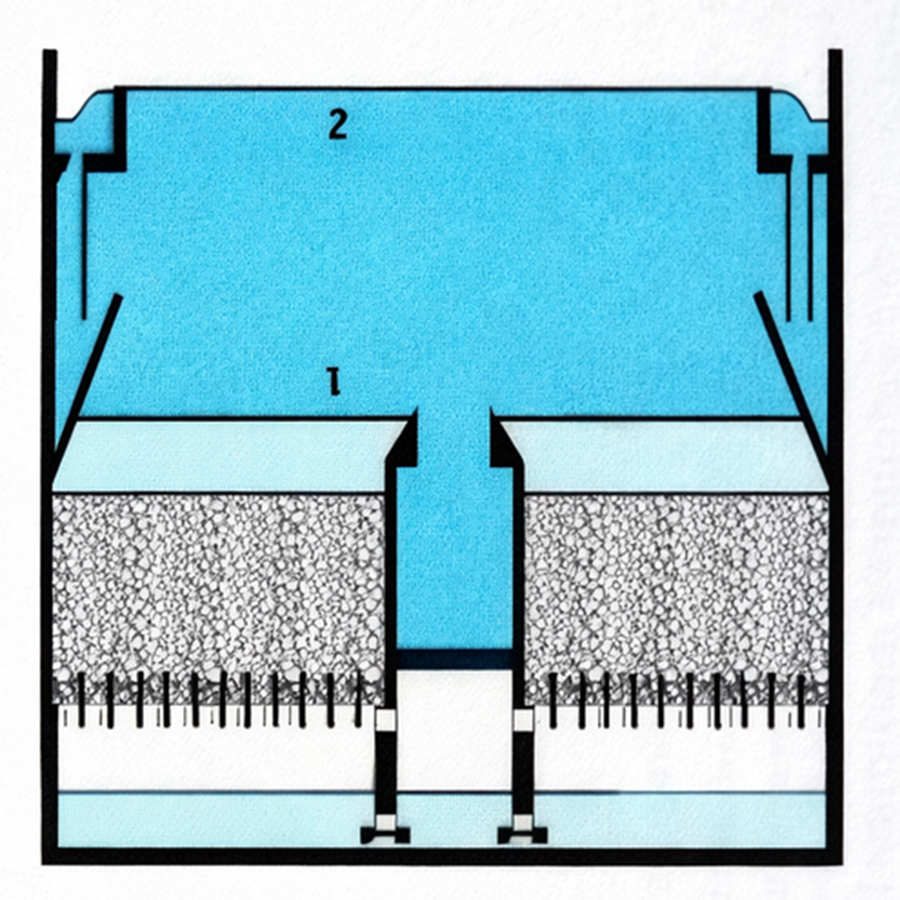
When the filter is clean, the water level (1) is set by the level of the filtered water outlet weir. At maximum fouling, the level rises to the supply water level (level 2).

In general, this water level rises from 1.50 to 2 m, depending on filtering mass granulometry.

These filters tend to be more basic, but there is a danger that the floc will break up, possibly affecting filtered water quality.

At the same time, the aim is to ensure that the water level over the filters remains fixed or only fluctuates slightly, and that the filtered water delivered 2 to 3 metres lower maintains a flow rate that is constant and equal to the total incoming flow rate, divided by the number of filters.

A filter rate controller mounted on each filter’s outlet maintains a constant flow rate, regardless of the filter’s level controller. The system includes an equal distribution mechanism. This device generates a secondary head loss that becomes significant when the filter is clean and which is cancelled out when the filter is completely fouled. In this way, the filter rate controller compensates for filter bed fouling.

Compared with constant rate variable head filters, constant rate compensated-clogging filters have the advantage of stable treated water quality and reliable operation, even in cases involving sudden flow rate fluctuations.

Filter battery control

In general, two types of control are used:

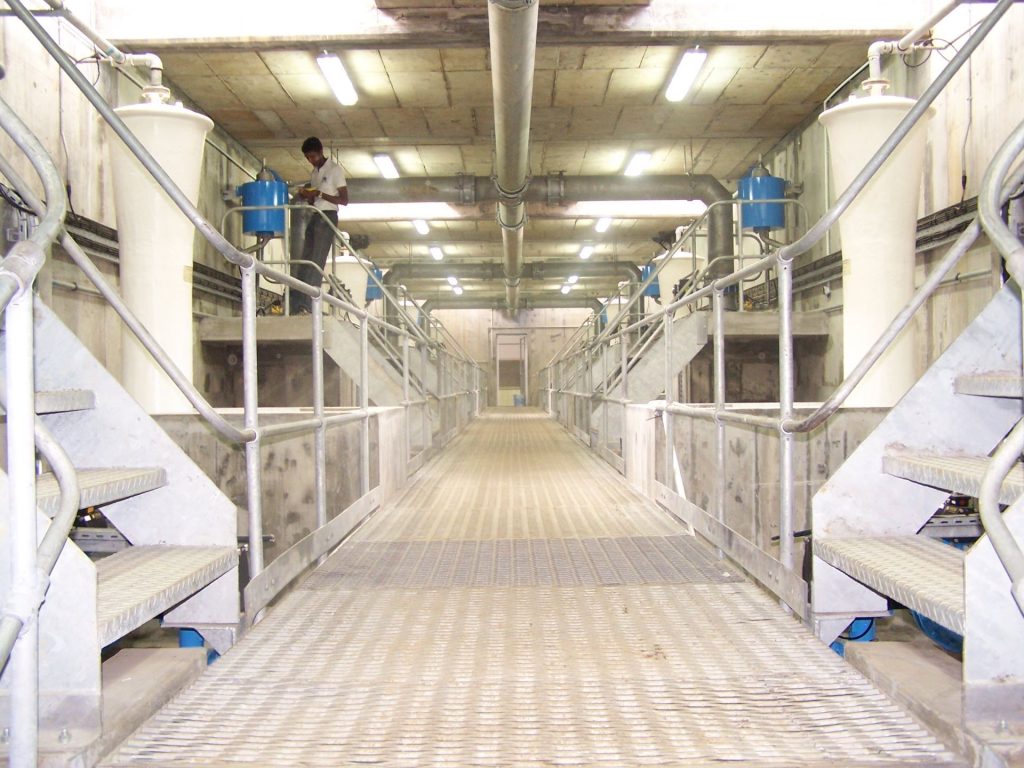
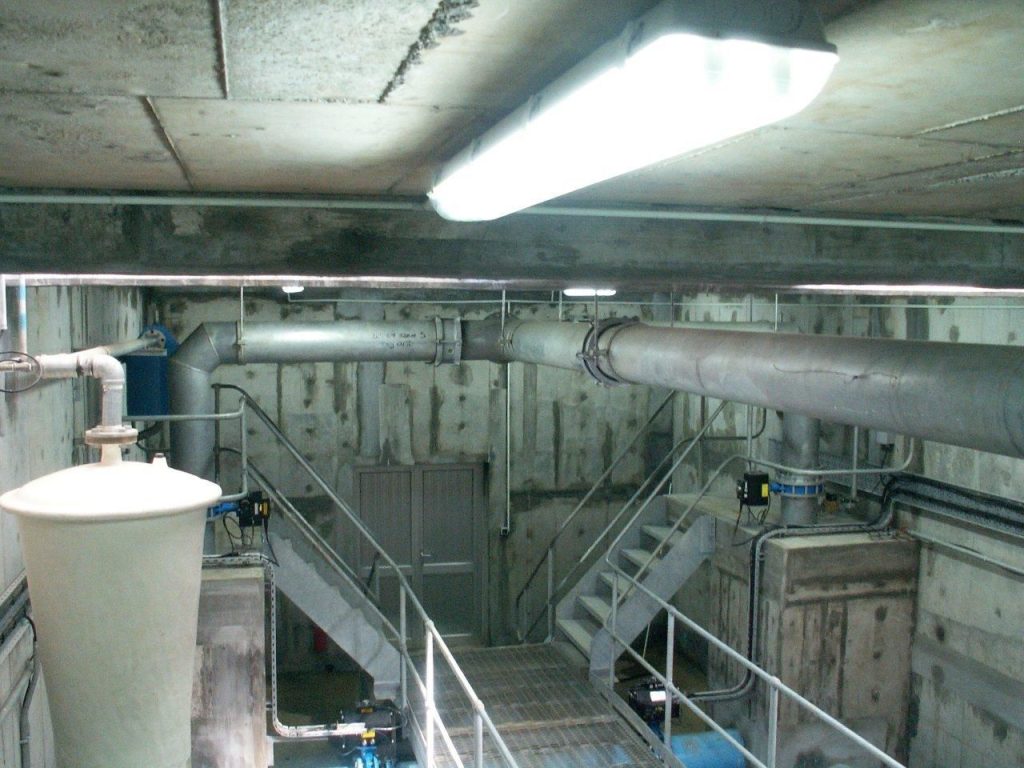
A. AQUAZUR® Siphon & Partialisation Valve System. This system is used to maintain a constant level in the filter by utilising the siphon to determine the level and the partialisation to control the vacuum through the siphon (hydraulic system).

B. AQUAZUR® ModFlow system. This system is an electronic system that controls the flow throughput through the filter by modulating the filter outlet valve.

A. AQUAZUR® Siphon & Partialisation Valve System

The AQUAZUR® Concentric Siphon and its Partialisation Unit are used for level control. The partialisation unit constitutes a measuring and control unit, and the siphon is a control unit.

This unit consists of two concentric tubes. Flow goes from the inner branch to the outer branch.

When air is injected into the top, it is drawn by the water into the downstream branch where the air-water mixture density is lowered, reducing the vacuum in the neck.

Without partialisation air, the vacuum at the neck is equal, within the pressure drop in the downstream branch, to the height “H”, which is the difference between the filtered water level and the downstream filtered water chamber level.

With air partialisation, this void is reduced to height “h1”, equal to the product of “H” by the water air mix density.

The difference H – h1 = h2 represents the pressure drop thus created by the air input.

Principle of a partialized siphon

If h1 represents the pressure drop, with a clean filter, caused by the passage of the flow to be filtered through the filtering bed, the floor and the filtered water outlet pipe to the siphon neck, h2 represents the fouling depth available for the filtering bed.

All we need to do is, with a clean filter, inject enough air to create a pressure drop h2 and, as the filtering bed becomes fouled up, reduce the air flow down to zero so that h1 increases up to H.

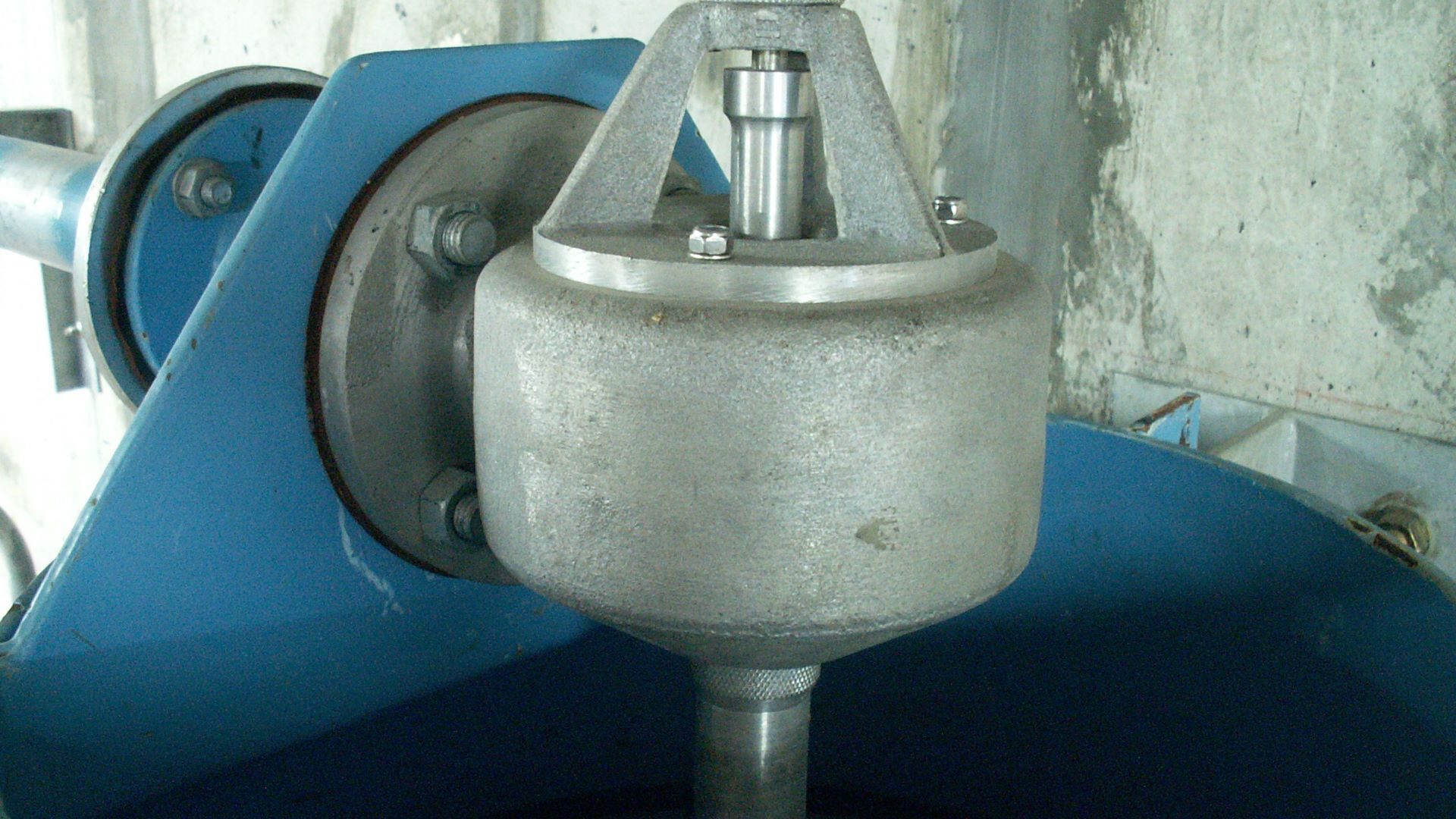
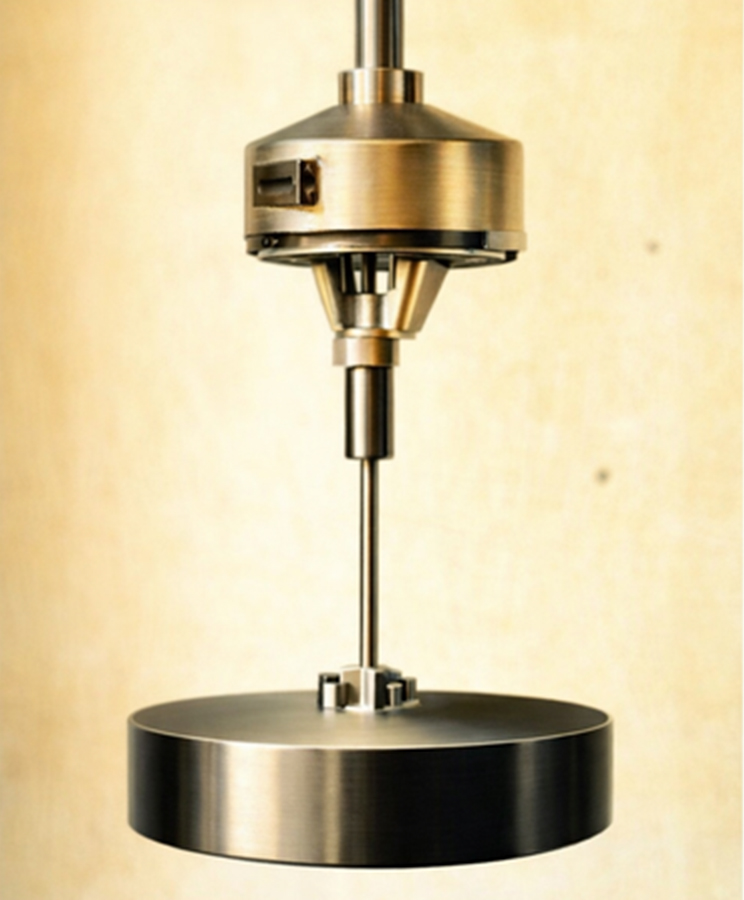
Partialisation Unit

This is the control mechanism used to inject air into the top of the siphon to control its flow rate.

The air flows through an opening. The section of this opening is altered by a moving component comprising a float and a return spring.

AQUAZUR® ModFlow System

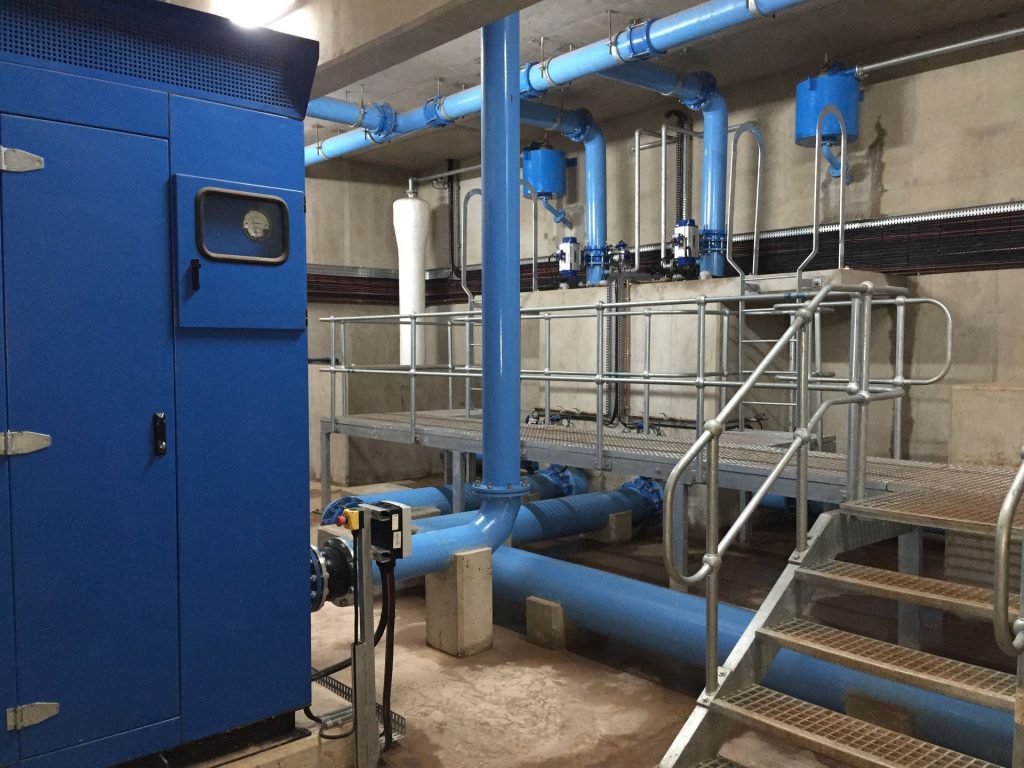
The ModFlow System is a control system developed by Aquazur® using a programmable logic controller. The programmable logic controller actuates a control valve mounted on the filter water discharge pipe, creating a secondary head loss that compensates for filter fouling.

The ModFlow controller regulates valve movements according to the signals delivered by the ultrasonic level sensor situated inside the filter bed, measuring the water height and valve positioner so that:

Under stabilised operating conditions, the level of water in the filter remains close to its set point, irrespective of the flow rate.

During restarts after a wash, or in the event of a change to the flow rate, the filter gradually comes up to speed, without any surges, in order to minimise outlet turbidity peaks.

Each filter is equipped with a ModFlow Controller. The battery of filters are usually connected through a network (Profinet). Each system is controlled individually by each controller, but the battery can be viewed remotely.

In this case:

Equipment specific to each filter (valves, sensors …) is connected to the relevant ModFlow Controller that transmits data delivered by the sensors to which it is connected.

Valves and sensors on washing equipment and on auxiliary equipment common to the filter battery are connected to the main programmable logic controller.

The main programmable logic controller is responsible for managing the operation and the washing of the entire filter battery. It actuates the control mechanism and the valves for each filter by transmitting its signals via the ModFlow Controller, which in turn controls the controller valve setting.

The ModFlow Controller combines all the principles that are characteristic of good filter control and consequently constitutes the most advanced solution in this field:

Stable instantaneous output and slow flow rate fluctuations each time the plant operating conditions change, resulting in consistent filtered water quality.

Constant level, upstream control. The stable water depth over the filter bed avoids the danger of occasional vacuums forming within the filter bed.

Reliability through the use of a few simple and reliable sensors and networked, proven technology programmable logic controllers.

Optimised battery management, incorporating backwash management and control.